The Hundred Years War
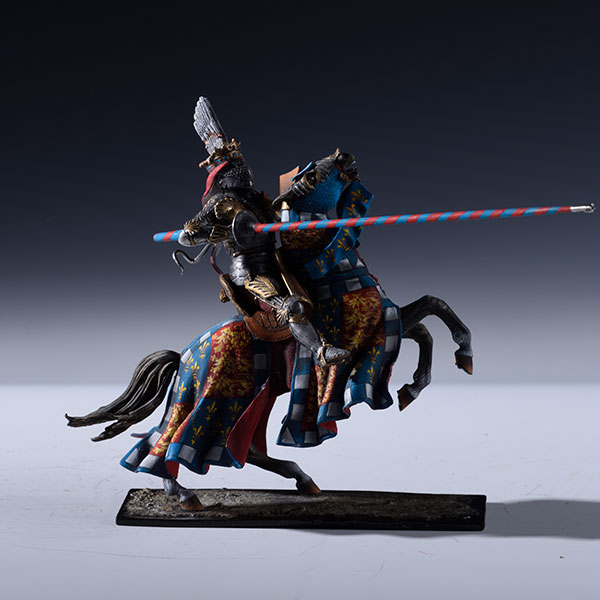
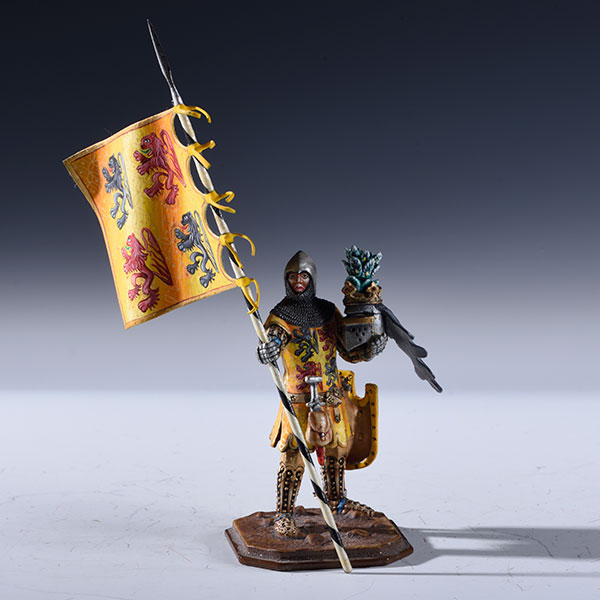
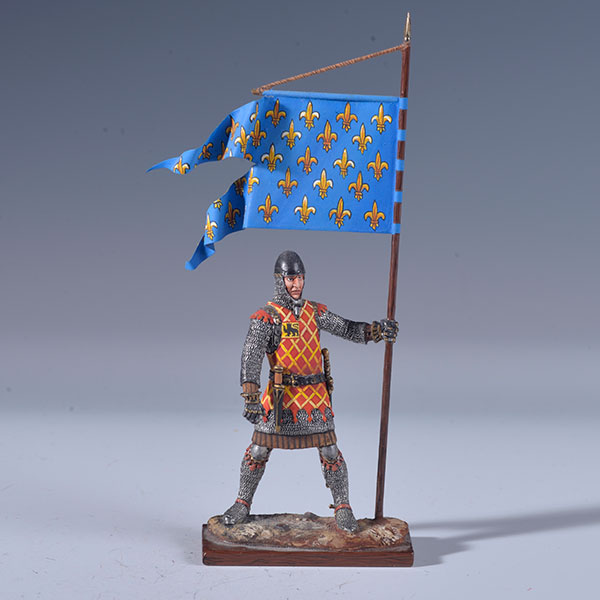
The Hundred Years’ War was a prolonged conflict lasting from 1337 to 1453 between two royal houses for the French throne, which became vacant with the extinction of the senior Capetian line of French kings. The two primary contenders were the House of Valois and the House of Plantagenet, also known as the House of Anjou. The House of Valois claimed the title of King of France, while the Plantagenets from England claimed to be Kings of France and England. Plantagenet Kings were the 12th century rulers of the Kingdom of England, and had their roots in the French regions of Anjou and Normandy. French soldiers fought on both sides, with Burgundy and Aquitaine providing notable support for the Plantagenet side.
The conflict lasted 116 years but was punctuated by several periods of peace, before it finally ended in the expulsion of the Plantagenets from France, except for the Pale de Calais. The war was a victory for the house of Valois, who succeeded in recovering the Plantagenet gains made initially and expelling them from the majority of France by the 1450s.
The war owes its historical significance to a number of factors. Though primarily a dynastic conflict, the war gave impetus to ideas of both French and English nationality. Militarily, it saw the introduction of new weapons and tactics, which eroded the older system of feudal armies dominated by heavy cavalry. The first standing armies in Western Europe since the Roman Empire were introduced for the war, thus changing the role of the peasantry. For all this, as well as for its long duration, it is often viewed as one of the most significant conflicts in the history of medieval warfare. In France, the English invasion, civil wars, deadly epidemics, famines and marauding mercenary armies, turned to banditry, reduced the population by two-thirds. Relieved of its Continental possessions, England was left an island nation, which affected its development for more than 500 years.
Showing 1–12 of 35 results
-
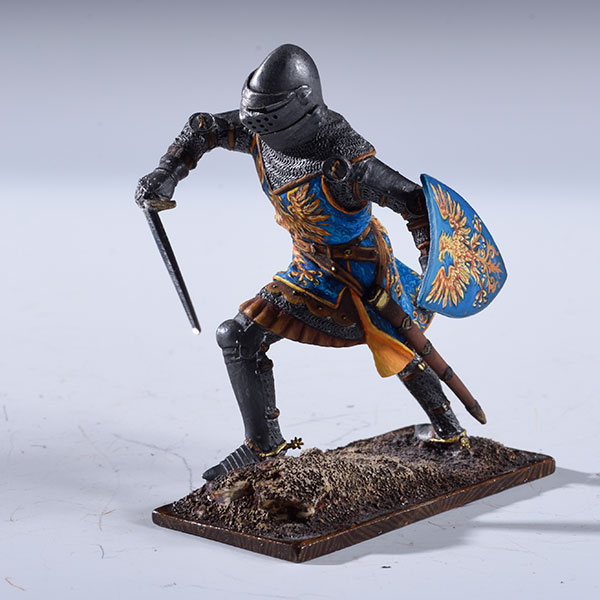
14th C Knight in Combat w/Sword and Shield (1618)
$190.00
-
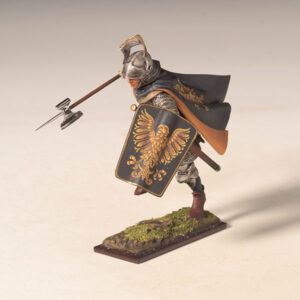
14th C Knight, Charging w/Axe
$235.00
-
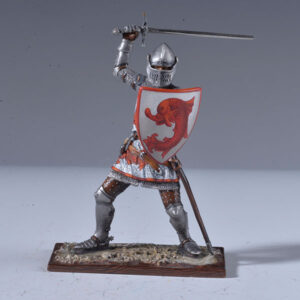
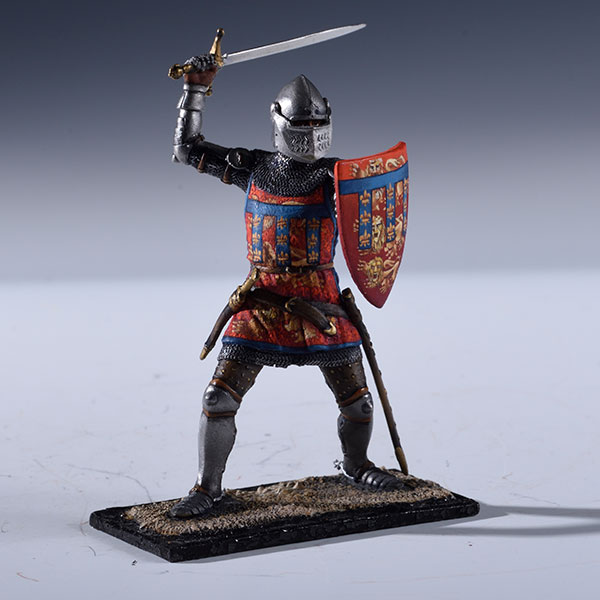
15th C Knight in Battle w/Sword, Axe or Mace (1366)
$190.00
-
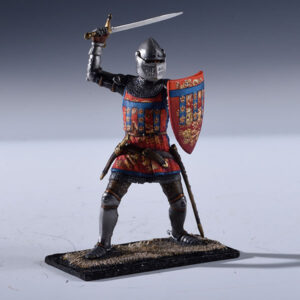
15th C Knight in Battle w/Sword, Axe or Mace (1612)
$190.00
-
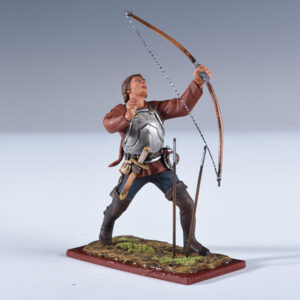
Agincourt Archer, Holding Bow (1049)
$225.00
-
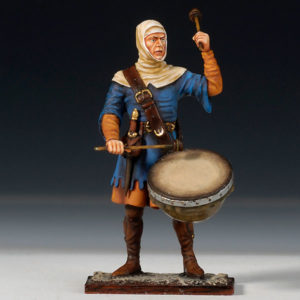
Agincourt Yeoman w/Kettle Drum
$215.00
-
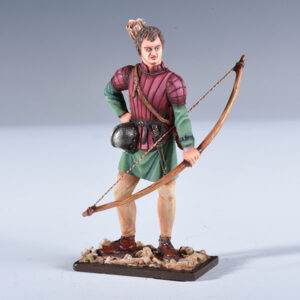
Agincourt-English Archer (1058)
$125.00
-
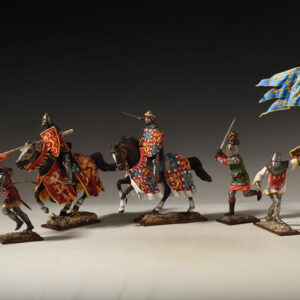
Agincourt: Jean Count of Roucy w/Sword, Jacques, Lord of Dampierre, w/Lance, Jean le Maingre w/Sword and Flag, Man-at-Arms w/Spear, Man-at-Arms w/Sword
$950.00
-
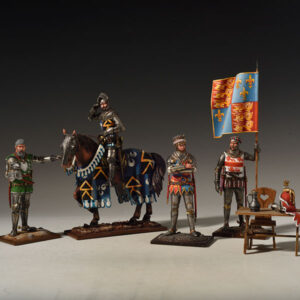
Agincourt: King Henry V, Sir Thomas Erpingham, Sir John Codrington w/Flag, Sir Edmond de Thorpe, Table/Chair w/King’s Battle Helmet
$995.00
-
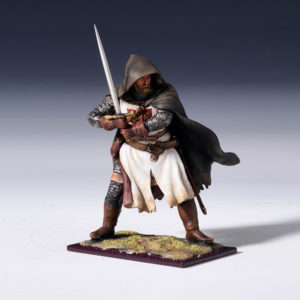
Baron Bartholomew de Burghersh
$210.00
-
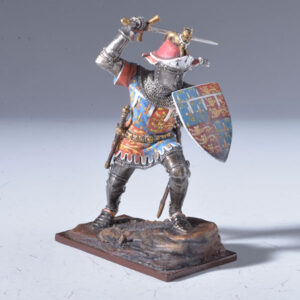
Black Prince w/Sword, Wearing Ceremonial Helmet (1371)
$225.00
-
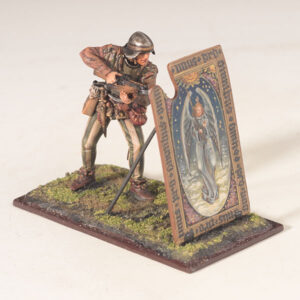
Crossbowman Behind Decorated Pavise
$285.00