

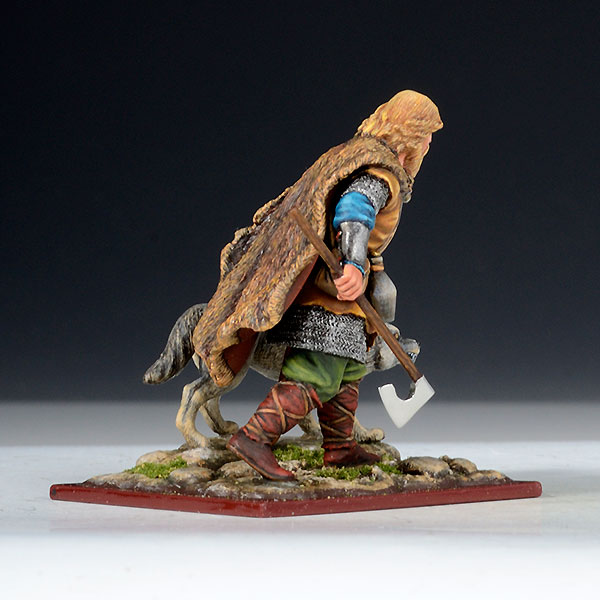
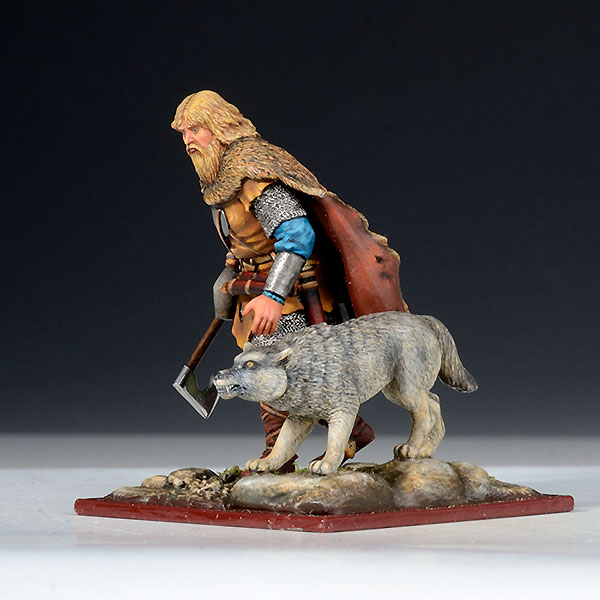
Description
What we know about Olaf Tryggvason, King of Norway, comes from the “Heimskringla” saga, written in about 1230 AD.
The murder of his father Triggvi Olafsson forced his mother to flee to the Orkney Islands to protect the life of her young son. Young Olaf and his mother were forced to flee from his father’s killers again. This time to the Kievan Rus where his mother’s brother was in service to King Vladimir the Great.
Olaf left the Kievan Court in his teens and for some years voyaged as a Viking raider, harrying the Baltic coasts and the British Isles. Through these raids he rose to a position of authority and was one of the leaders of the Norse army that defeated the Anglo Saxons at the battle of Maldon in 991.
Olaf, having become a Christian during his time in England, returned to Norway and unseated the pagan king Olaf the Great.
In the year 1000 AD. Olaf lead a large squadron of ships, including his own famous vessel the “Long Serpent,” to Poland, then called Wendland, to meet with King Burislav I. On his return voyage Olaf was set upon by his erstwhile allies Sweyn I “Forkbeard” and Swedish King Olaf Skotkonung. Although he put up a valiant defense he was overwhelmed and killed.