



Description
When Tiberius died in 37 AD, there was celebration in the Senate as well as the populace. Although unpopular, his reign left the empire wealthy and powerful. No one had commanded more armies and provinces than Tiberius and he left 3000M sesterces surplus in Rome’s treasury.
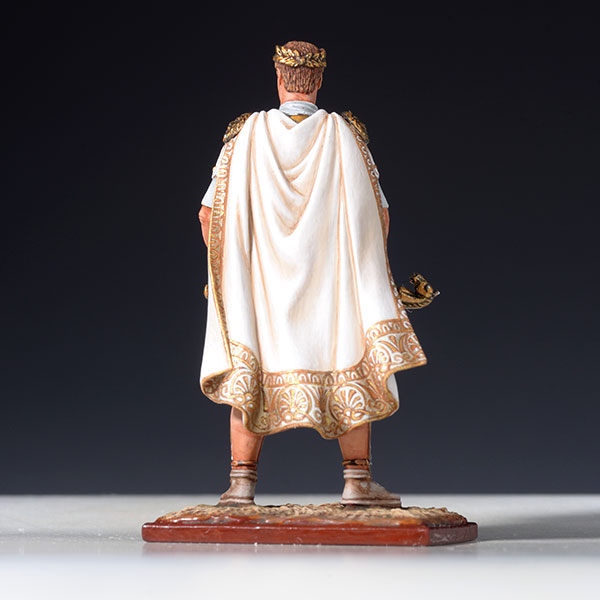
Tiberius’ nephew Gaius was named his successor. As a youngster, he accompanied his popular father General Germanicus at the Rhine frontier, and the legions named him Caligula (“Little boots”). He had no experience or skills. Rome was to learn Caligula was a dangerous and unpleasant man, verging on the megalomaniacal. Tiberius, having determined that Caligula was to be his successor, said that he was ‘nursing a viper to succeed him.” And a viper he was.
Caligula squandered the surplus Tiberius left in the treasury. As a result of his profligacy, Caligula levied ruinous and outrageous taxes on the populace. Tiberius was correct that Caligula lacked skill and experience; he was wholly unsuited to wielding absolute power.
It became obvious that Caligula suffered from mental failings. In January of 41, while Caligula was watching a gladiatorial show, he was assassinated by the imperial bodyguards. Caligula’s legacy was being the most infamous ruler in Roman history.